Remote Group Play · 3–4 Players

Four-player tactical and survival loops

Four is the sweet spot of remote multiplayer: large enough for specialized team roles, small enough that voice channels stay conversational rather than chaotic.

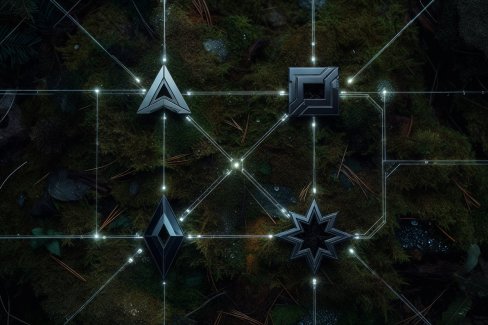
Four distinct geometric squad icons connected along tactical lines on dark moss
01 — The Four-Seat Rhythm

Why mission-based loops outlast endless campaigns

Adult schedules rarely allow all four members of a squad to log in at the exact same hour every week. Games built around self-contained 25-to-45-minute missions handle irregular attendance far better than linear story campaigns that punish whoever misses Tuesday night.

Titles such as Deep Rock Galactic, Helldivers 2, and Left 4 Dead 2 structure play around drop-in operations: enter an environment, complete primary and side objectives, manage scarce ammunition or health, and extract before the pressure overwhelms you. Even if a fourth friend arrives halfway through the first run, they can wait ten minutes in voice chat and jump cleanly into the second operation—or drop right into an active mission if squad slots are open.

02 — Class Synergy Without Rigid Meta

Designing roles that invite casual cooperation

The best squad games give every player a signature tool that naturally begs for a teammate's follow-up. Look at Deep Rock Galactic: an Engineer places foam platforms high on a cavern wall, the Scout grapples up to mine minerals, the Gunner hangs ziplines over chasms, and the Driller bores shortcuts straight to the extraction pod. You rarely need to bark orders; spotting a high mineral vein naturally triggers a silent collaboration.

Sea of Thieves splits labour along physical ship stations instead of character classes. On a four-person galleon, steering, raising sails, bailing water, firing cannons, and scanning the horizon happen simultaneously. One player who prefers calm navigation can spend the voyage plotting treasure islands on the lower-deck map table while more combat-minded friends watch the crows-nest. Similarly, Monster Hunter: World lets four friends mix heavy shields, long-range bowguns, and horn buffs without locking anyone out if two people pick the same weapon.

Game Typical Squad Mission / Session Style Coordination Mechanic
Deep Rock Galactic 1–4 players Procedural cave missions Interlocking traversal tools and laser pointer
Helldivers 2 1–4 players Planetary extraction runs Shared stratagem cooldowns and buddy reloads
Left 4 Dead 2 4 players Linear campaign chapters Rescuing pinned teammates and sharing kits
Sea of Thieves 1–4 players Open-sea voyages Multi-station sailing, bailing, and navigation
Monster Hunter: World 1–4 players Single-target boss hunts Stagger windows, traps, and weapon roles
Factorio 2–8+ players Persistent factory building Modular production lines and blueprint sharing
03 — Context Pings and Quiet Communication

Keeping voice chat pleasant rather than exhausting

Friends logging on after work want to catch up about their week, not bark directional bearings for two straight hours. Games with strong contextual ping systems protect that social space. When a single button press marks an ammo crate, highlights an incoming patrol, or draws a quick beacon on the HUD, casual banter can continue uninterrupted.

Pay attention to revive pacing as well. Squad games become frustrating fast when an early mistake leaves one friend watching a grey camera screen for twenty minutes. In Helldivers 2, any living squadmate can toss a reinforcement beacon within seconds, turning a messy wipe into a dramatic landing. Left 4 Dead 2 puts fallen survivors in nearby closets a short walk ahead so the team stays together instead of restarting the whole chapter.

04 — Persistent Worlds vs. Fresh Resets

Balancing power gaps across a long month

Every regular online squad eventually encounters schedule drift: two people log twenty extra hours on the weekend, unlock stronger gear, and return to Tuesday's session out-levelling everyone else. Survival and factory sandboxes such as Factorio handle this gracefully when groups agree to keep shared bases running only when everyone is online, or when veterans tackle distant logistics like rail networks while newcomers expand starter smelters.

If your group hates worrying about level disparities altogether, lean toward horizontal-progression co-op titles where unlockables offer alternate playstyles rather than raw statistical superiority, or drop into difficulty-scalable missions where veterans dial down challenges on casual nights so nobody feels dragged along.